
Learn why US-based call center services matter for telecom companies, how domestic support compares with offshore, and when a hybrid support model works best today.
A fiber customer in Ohio calls about a double charge on her bill. She reaches an agent who knows her local service. The agent fixes the charge in one call. That simple moment keeps her from switching providers. For US telecom companies, moments like this happen thousands of times a day. That is why US-based call center services still matter in 2026. Even as AI and global outsourcing grow, local support plays a key role. This guide explains what domestic support offers, where it fits best, and how to choose the right model.
US-based call center services use agents in the US to handle customer calls, chats, and messages. They offer clear calls, the same time zones, close oversight, and US handling of sensitive data. Many telecom companies blend domestic teams with nearshore, offshore, and AI support to balance quality, cost, and scale.
What Are US-Based Call Center Services?
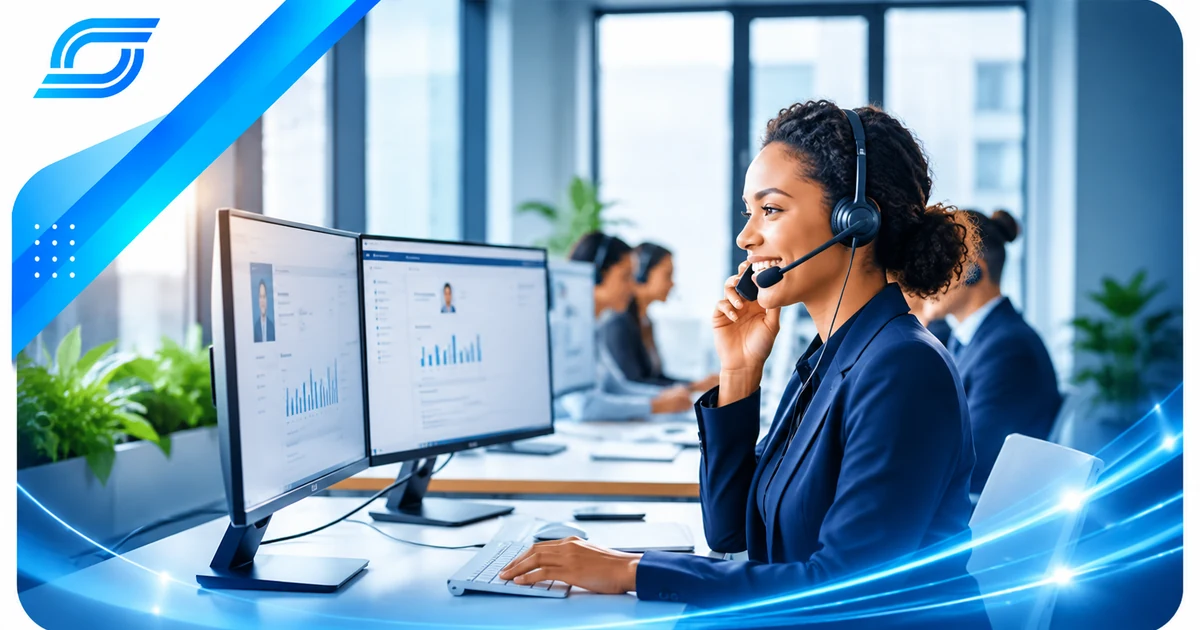
US-based call center services are customer support teams made up of agents who live and work in the US. A business can staff its own domestic call center or outsource the work to a US-based partner. These teams handle inbound calls, outbound calls, chat, email, text, and social media.
For telecom companies, domestic teams often cover customer care, technical support, billing questions, new service activations, and retention. Some agents work in call center sites. Others work from home across the country.
Why Domestic Customer Support Matters for US Businesses
Domestic support is not right for every task. However, it brings clear strengths in four areas.
Clearer Calls With Customers
US-based agents share the language and culture of most American callers. They know local terms, local services, and common worries. As a result, calls feel natural, and fewer customers need to call back.
Same Time Zones and Faster Fixes
Domestic teams work the same hours as your customers and your own staff. So agents can reach network, billing, and field teams in real time. This helps solve problems such as outages or failed installs faster.
More Oversight and Control
With US teams, leaders can visit sites, join training, and listen to calls on the same day. In addition, changes to scripts, offers, or processes roll out quickly. Overall, this close contact makes quality easier to manage.
Data Security and US Rules
Security depends on controls, not just location. Strong partners in any country use PCI DSS and SOC 2 controls, access limits, and regular audits. Still, US rules now lean toward keeping sensitive tasks at home. For example, the FCC released a proposal on March 27, 2026, for telecom, cable, and VoIP providers. It would require US-based agents to handle passwords, payment details, and Social Security numbers, according to a Cooley summary of the FCC proposal. The proposal also floats a cap on calls handled offshore and a right to transfer to a US-based agent. Strong risk management helps providers get ready either way.
How US-Based Call Centers Benefit Telecom Companies
Telecom customers often call about urgent issues. A lost connection can stop someone from working, and a billing error can damage trust fast. Domestic support helps in several key areas.
First, billing support agents can explain charges, credits, and local taxes clearly. Next, activation teams guide new customers through setup, porting, and first-bill questions. Meanwhile, retention and win-back agents can build trust with customers who plan to cancel. Also, domestic tech support works closely with US field and network teams.
People still matter in this work. In fact, 87% of customers say companies that use GenAI for service must offer a way to reach a human agent, according to a 2026 Gartner survey. Domestic teams often serve as that trusted human option.
US-Based vs. Offshore Call Center Outsourcing
Both models have real strengths. The table below compares them fairly.
| Factor | US-based call center | Offshore call center |
|---|---|---|
| Cost per agent hour | Higher | Lower |
| Language and cultural fit | Strong for US callers | Varies by site and training |
| Time-zone alignment | Same hours as US customers | Often needs night shifts |
| Oversight and site visits | Easy and fast | Needs more planning |
| Sensitive transactions | Fits proposed FCC onshore rules | May need routing to US agents |
| Scale and 24/7 coverage | Good, but labor pool is tighter | Large talent pools, easy 24/7 |
| Best fit | Complex, sensitive, high-value calls | High-volume, routine contacts |
Cost is the biggest trade-off. In fact, US customer service reps earned a median of $21.53 per hour in May 2025, according to the Bureau of Labor Statistics. By contrast, offshore sites usually cost less per hour. Still, total cost also depends on first-call fixes, repeat calls, churn, and rule risks.
What to Consider When Choosing a Domestic Call Center Partner
Not all US-based call center outsourcing companies fit telecom work. When you compare options, look for:
- Telecom experience: Knowledge of wireless, broadband, cable, and MVNO support.
- Security and compliance: PCI DSS, SOC 2, and clear data controls.
- Service range: Customer care, technical support, billing, activations, and retention under one roof.
- Tools: Support for every channel and AI solutions that support agents.
- Flexible locations: The option to add nearshore or offshore teams as you grow.
- Clear reporting: SLAs, quality scores, and regular reviews.
Can a Hybrid Onshore and Offshore Model Deliver Better Results?
For many telecoms, the answer is yes. A hybrid model routes each type of contact to the team that suits it best. The graphic below shows a simple way to decide.
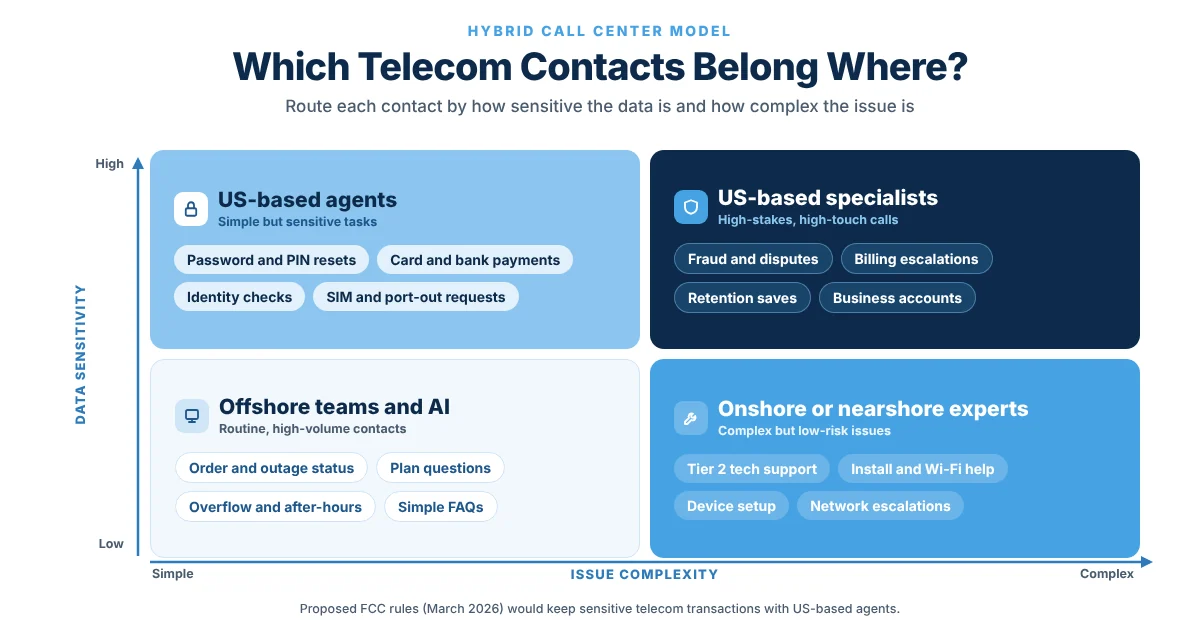 A simple way to route telecom contacts across US-based, nearshore, offshore, and AI support
For example, US-based agents can handle sensitive account changes, payment issues, retention saves, and hard cases. Nearshore and offshore teams can then cover routine questions, overflow, and after-hours support. Meanwhile, AI tools can answer simple status checks. This mix lets you protect quality where it matters most while keeping costs under control. To learn more, see our guide to onshore, nearshore, and offshore telecom support.
Choose the Right US-Based Support for Your Telecom Business
The right mix of domestic and global support helps you protect customer trust, meet new rules, and control costs. Sequential Tech delivers US-based telecom outsourcing for carriers, MVNOs, and broadband providers, with customer care, technical support, billing, activations, and retention teams. We also offer nearshore and offshore sites for a flexible hybrid model. Talk to our telecom support experts to design a domestic or hybrid model that fits your customers and your budget.
Frequently Asked Questions
What are US-based call center services?
US-based call center services are support teams made up of agents in the US. They handle calls, chats, emails, and texts for businesses. Companies can run their own domestic centers or outsource the work to a US-based call center partner.
Are US-based call centers more secure than offshore call centers?
Not always. Security depends on controls, contracts, and audits, not location alone. However, proposed FCC rules would require telecom providers to handle sensitive data, such as passwords and payment details, with US-based agents.
Why do telecom companies use US-based call centers?
Telecom companies use US-based call centers for clear talk, shared time zones, and close oversight. Domestic teams suit billing disputes, hard tech issues, new activations, and retention calls. They also help providers prepare for proposed FCC onshoring rules.
Are US-based call center services more expensive?
Yes, US-based call center services usually cost more per agent hour than offshore services. However, they can lower total costs. They often fix more issues on the first call, cut repeat contacts, and keep more customers.
What is a hybrid call center model?
A hybrid call center model combines US-based, nearshore, offshore, and AI support. Each team handles the contacts it suits best. For example, domestic agents take sensitive and complex calls, while global teams handle routine and overflow volume.