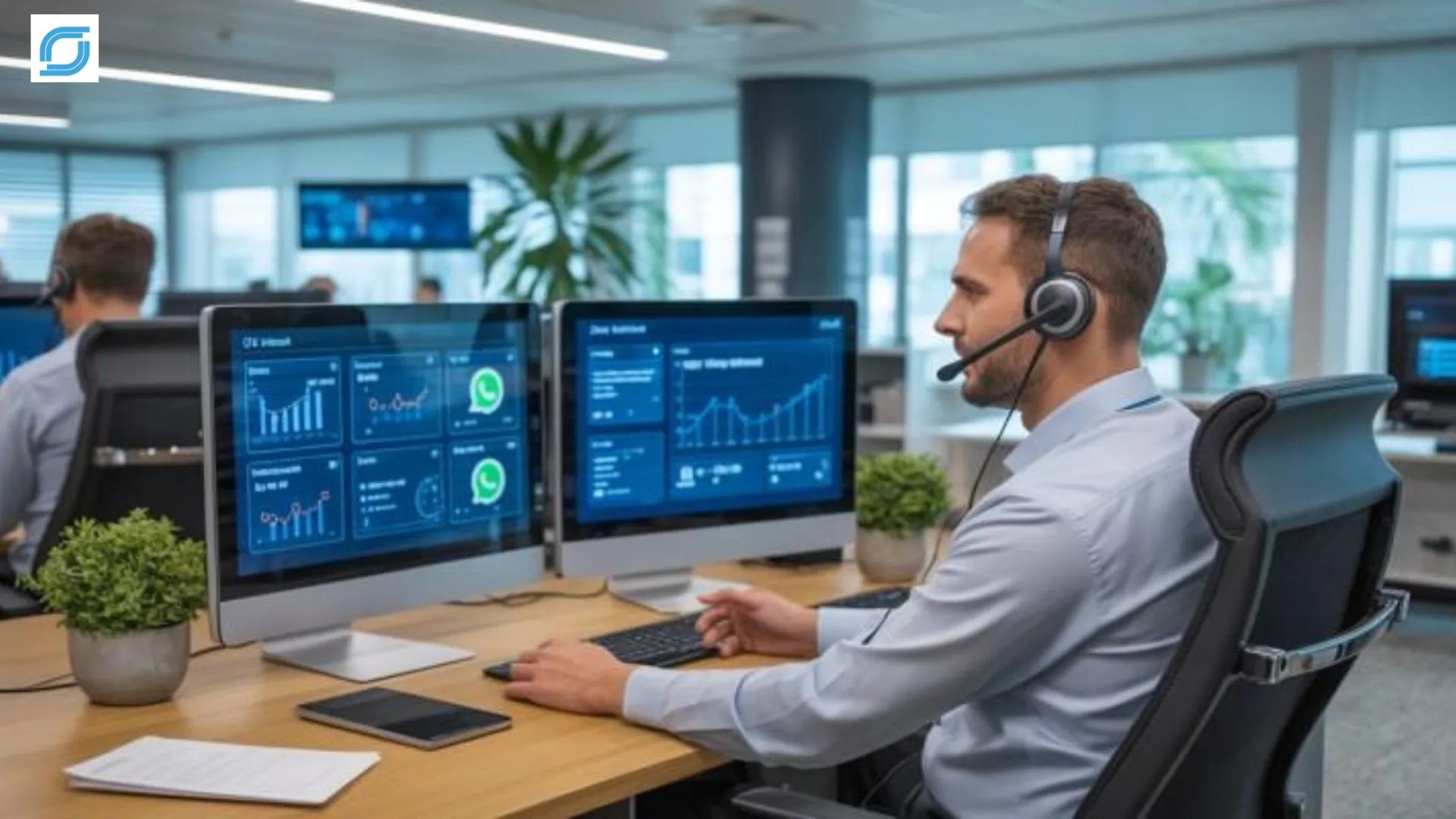
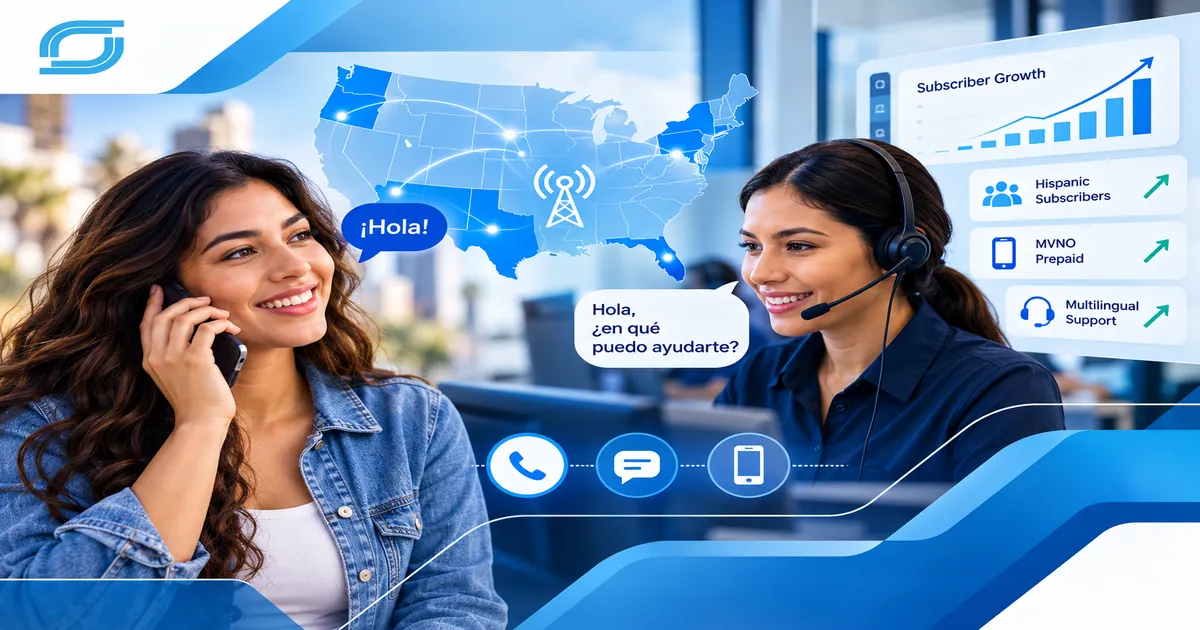
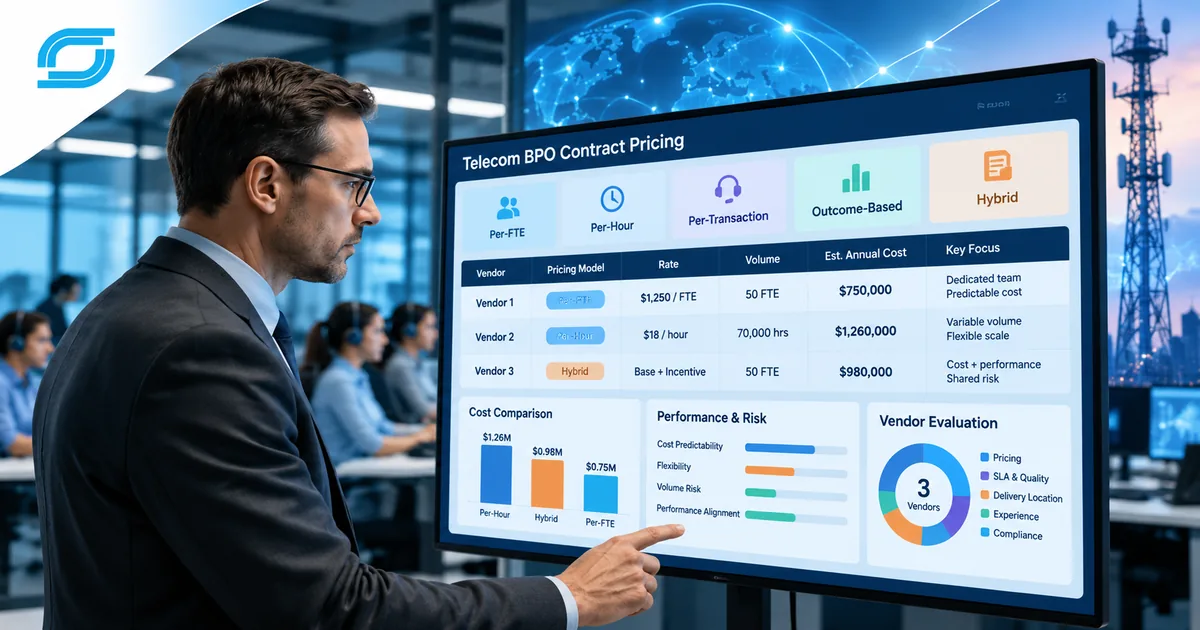
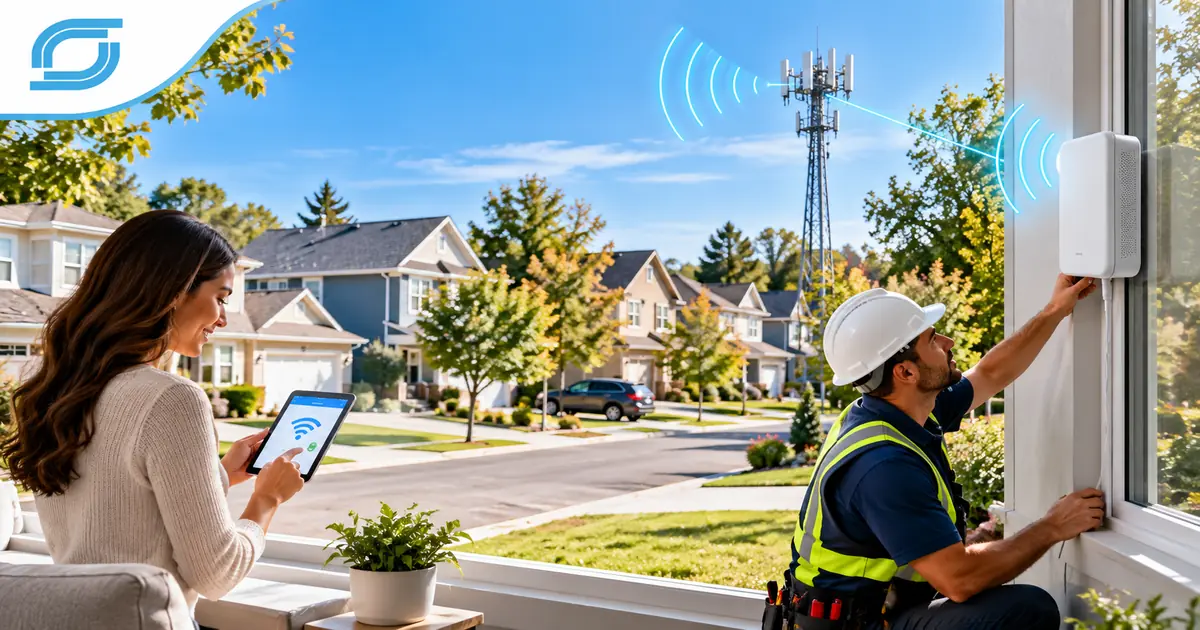
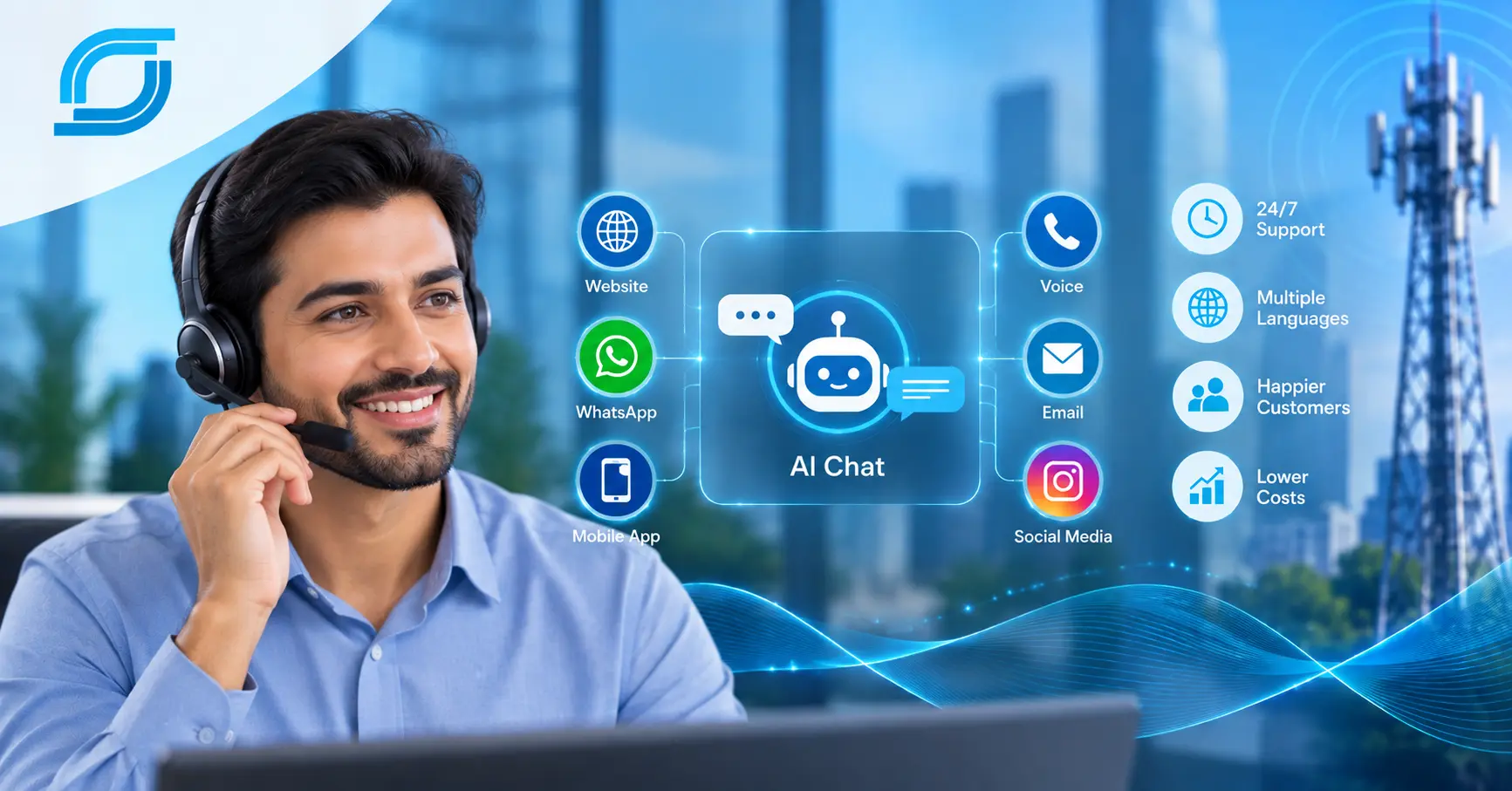
A look at the specific telecom customer support outsourcing services operators are deploying in 2026 — and why specialized BPO partnerships are outperforming in-house models across billing, technical support, retention, and fraud management.
A telecom subscriber waits 18 minutes on hold to dispute a billing error. They hang up. They tweet about it. Three days later, they port their number to a competitor. That one unresolved interaction — among millions that happen every day across the global telecom industry — is the real cost of an under-resourced support operation.
In
Deloitte’s 2026 Telecommunications Industry Outlook, up to 77% of consumers feel no loyalty to their telecom provider, and only 47% stay with their primary operator for more than a year. The math is brutal: telecom companies are losing subscribers not because their networks are bad, but because their customer experience is.
So operators worldwide are turning to
telecom customer support outsourcing services to close the gap — deploying specialized BPO partners who bring trained agents, telecom-specific workflows, and AI-augmented tools to manage subscriber interactions at scale.
The
global BPO market hit $328.4 billion in 2025 and is projected to reach $358.6 billion in 2026, with IT and telecommunications the largest share of that spend (Grand View Research). But not all outsourcing programs are built the same. The ones that deliver the strongest outcomes are designed specifically around the complexity of telecom operations.
The right outsourcing mix spans several support functions — full-lifecycle digital app support, OTT and streaming support that retains, and transparent billing that builds broadband trust.
This is one reason so many providers are turning to telecom call center outsourcing as a growth lever.
For a snapshot of the wider market, see the top telecom companies in the USA.
Why Telecom Customer Support Demands Specialization
General-purpose call-center outsourcing can handle simple inbound volume. Telecom operations are far more complex. In a single call, agents may navigate billing systems, activation platforms, SIM provisioning, number-porting protocols, and network-level troubleshooting. They do it across prepaid, postpaid, eSIM, 4G, and 5G environments while staying compliant with standards like PCI-DSS and SOC 2.
And the cost of poor handling is immediate and measurable. A billing error not fixed on first contact becomes a churn risk. A failed activation becomes a negative review. A missed fraud signal becomes an account takeover. So operators increasingly want BPO partners with domain-specific training, telecom-grade tooling, and clear SLAs tied to resolution speed and satisfaction.
Gartner projects 75% of all customer interactions will be AI-powered by 2026. Specialized telecom BPO partners are already blending AI-driven quality monitoring, voice automation, and chat tools with human agents — hybrid models that handle routine queries fast while routing complex issues to trained specialists.
Core Telecom Customer Support Outsourcing Services in 2026
The table below lays out the main telecom BPO services operators are outsourcing in 2026, what each function covers, and the measurable outcomes specialized delivery produces.
Telecom BPO Services: Functions, Scope, and Outcomes (2026)
| Service |
What Gets Outsourced |
Business Outcome |
| Customer Care |
Inbound queries, account changes, service requests, complaints |
Faster response times; 24/7 coverage without internal shift expansion |
| Technical Support |
Network troubleshooting, device setup, connectivity issues, eSIM activation |
Higher first-contact resolution; reduced repeat contacts |
| Billing Support |
Invoice disputes, payment processing, recharge queries, plan changes |
Lower billing escalations; improved payment recovery rates |
| Activations & Onboarding |
SIM provisioning, number porting, new account setup |
Smoother subscriber onboarding; reduced drop-off at activation |
| Retention & Win-Back |
Churn risk identification, loyalty outreach, cancellation handling |
15–25% reduction in monthly churn for outsourced programs |
| Fraud & Risk Management |
Suspicious activity detection, SIM swap verification, account protection |
Reduced fraud losses; faster threat response with trained analysts |
What Makes Outsourced Telecom Customer Care Deliver Results
Outsourcing a function doesn’t automatically improve it. But when operators partner with BPOs that specialize in telecom customer service, three structural advantages show up consistently.
1. Telecom-Trained Agents From Day One
Specialized telecom BPO providers onboard agents with training built around carrier systems, not generic service scripts. Agents understand SIM provisioning sequences, billing-platform logic, number-porting timelines, and escalation paths before their first live call. Average handle time drops and first-contact resolution rises, usually within the first 60 days.
2. Omnichannel Coverage Across Every Subscriber Touchpoint
Subscribers expect support across voice, live chat, email, SMS, and social — with consistent answers whatever channel they use. Outsourced operations built omnichannel from the ground up deliver that consistency more reliably than in-house teams that bolted channels on over time. Omnichannel models also make it easier to capture interaction data across touchpoints, feeding retention and churn analytics.
3. Scalability Without Headcount Expansion
Telecom operators face predictable volume spikes — product launches, promotions, network outages, billing-cycle peaks. In-house teams either overstaff for those peaks or fail subscribers during them. Specialized BPO partners scale agent capacity up or down within days, holding service levels steady regardless of volume. That scalability extends to new markets and languages as operators grow.
Outsourced Technical Support for Telecom: A Growing Priority
Of all outsourced functions, technical support is rising fastest in priority. 5G, eSIM, and IoT-connected devices have created new categories of subscriber queries that need agents with network-layer knowledge. Self-service tools handle tier-one queries, but complex troubleshooting — device compatibility, network configuration, roaming failures — still needs human expertise.
Specialized BPO partners run tiered technical support: tier-one agents handle standard troubleshooting, tier-two specialists take escalations that need deeper diagnostics. That structure cuts unnecessary escalations to internal engineering, freeing operators to focus on network investment instead of call handling. Operators report measurable gains in technical resolution rates and subscriber NPS within the first quarter of deployment.
Choosing the Right Telecom BPO Services Partner
Not every BPO can manage the full scope of telecom customer operations. Evaluate partners across five dimensions: telecom domain experience; compliance certifications (SOC 2, PCI-DSS, and HIPAA where applicable); omnichannel delivery; AI and quality-management tools; and proven SLA performance in comparable telecom environments.
The right partner should run a scalable global delivery model across multiple time zones and languages, with governance that gives operators full visibility into quality, compliance, and performance. Operators who assess these factors before signing consistently report stronger outcomes than those who pick on cost alone.
In 2026, telecom customer support outsourcing has moved well past cost reduction. The operators gaining the most treat it as a strategic capability — one that improves subscriber experience, cuts churn, and drives long-term revenue. The right partner doesn’t just handle contacts. It protects the subscriber relationships that keep operators competitive.
SCALE YOUR TELECOM CUSTOMER OPERATIONS WITH THE RIGHT BPO PARTNER
Sequential Tech helps telecom operators cut churn, resolve subscriber issues faster, and build the customer experience that drives long-term loyalty — without expanding internal headcount.
Explore Telecom BPO Services →
Post Views: 1,175