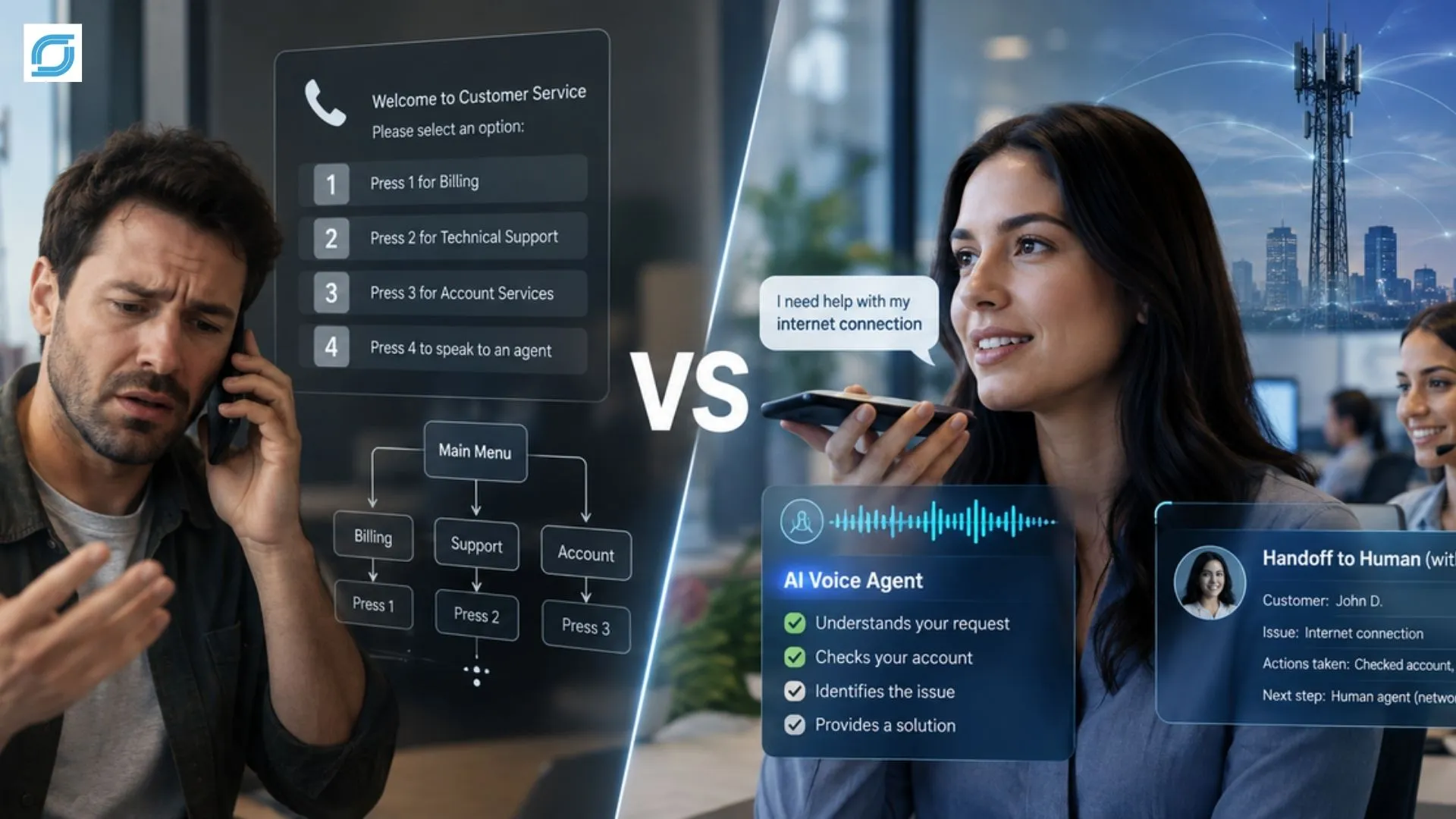

This guide reveals the hidden support costs telecom operators overlook, from agent turnover to manual tickets, and shows how outsourcing removes each cost in 2026.
Your support budget probably looks fine on paper. But hidden costs quietly eat into it every month. Turnover, overtime, manual work, and slow tickets rarely show up as one clear line item. Yet they add up fast.
This guide breaks down where real telecom BPO cost reduction comes from in 2026. Not the obvious savings, but the hidden ones most budgets miss entirely.
This guide covers only hidden cost drivers in telecom support. We skip unrelated topics entirely, so every section stays useful and specific.
The Hidden Costs Hiding Inside Telecom Customer Support
Most support budgets track salaries and software fees. However, several real costs sit just underneath those numbers. Here is what usually goes unseen:
- Turnover and retraining: Every departing agent triggers a new hiring and training cycle nobody plans for.
- Overtime and holiday premiums: These quietly inflate the true cost of a single support hour.
- Manual ticket handling: Slow, repetitive work costs far more per ticket than automated resolution.
- Compliance and QA overhead: Necessary, but often underpriced when teams build it in-house.
- Slow support driving churn: Frustrated customers leave quietly, and replacing them costs even more.
None of these show up as a single expense. Together, though, they explain why in-house support often costs more than leadership expects. Spotting them is the first step toward real telecom BPO cost reduction.
How We Identified These Hidden Costs
We reviewed 2025 and 2026 industry cost data on staffing, training, and support operations. We then matched each cost driver against current telecom BPO service delivery, using the same factors that matter when selecting a telecom BPO provider. This kept the guide focused on real, current numbers instead of guesswork.
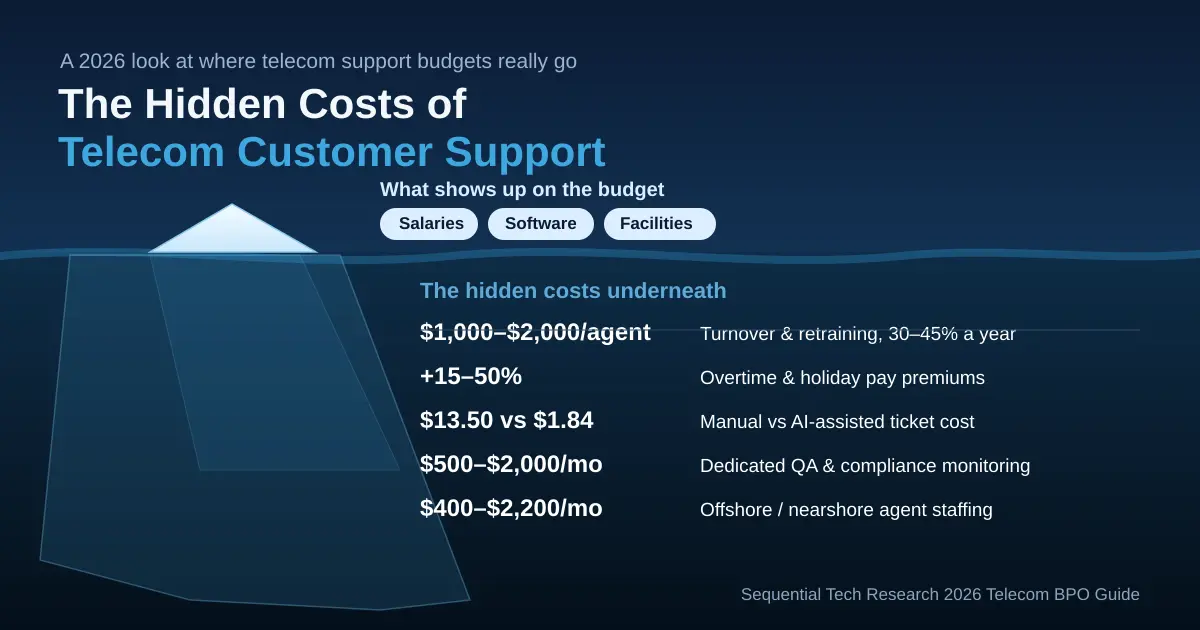 Key hidden costs in telecom customer support, including turnover, overtime, manual tickets, QA, and staffing.
1. The Hidden Costs Telecom BPO Removes
Some costs disappear the moment support work moves to a specialized partner. Here are the biggest ones.
I. Turnover and Retraining Costs
Support teams see 30% to 45% turnover every year. Each new hire costs $1,000 to $2,000 to train. Telecom BPO providers absorb this cycle completely, so it never lands on your budget. Over a full year, that repeated cost quietly rivals a full-time salary.
II. Overtime and Shift Premiums
Nights, weekends, and holidays often cost 15% to 50% more per hour in-house. BPO partners run multi-shift teams across time zones instead, which keeps rates flat around the clock. This removes one of the least visible line items in any support budget.
III. Manual Ticket Handling
A human agent resolving a routine ticket onshore costs about $13.50. AI-assisted resolution brings that down to roughly $1.84 for the same type of issue. That gap grows fast at scale, and it often becomes the hidden cost of deflection that technical support teams overlook.
IV. Compliance and QA Overhead
Dedicated quality monitoring can cost $500 to $2,000 a month when built in-house. Most BPO contracts fold this into the standard service instead of billing it separately.
II. How Telecom BPO Services Turn Hidden Costs Into Savings
Removing a cost is only half the story. Telecom BPO services also convert that savings into broader operational efficiency and a better customer experience.
I. AI-Assisted Ticket Deflection
Automated triage handles routine questions before they reach a live agent. This lowers cost per ticket and frees agents for harder cases that actually need a person. Fewer routine tickets also means shorter queues during peak hours.
II. Built-In QA and Compliance
Quality monitoring, call scoring, and compliance checks come standard with most telecom BPO services. Operators gain oversight without hiring a separate QA team, and without the $500 to $2,000 monthly cost that team usually carries.
III. Flexible, Right-Sized Staffing
Offshore and nearshore agents run $400 to $2,200 a month depending on region and skill level. This range lets operators match spend to task complexity instead of paying one flat, high rate for everything, from simple billing questions to advanced technical escalations.
IV. Predictable Per-Ticket Economics
Once cost per ticket is known, budgeting gets far easier. Telecom operational cost optimization becomes a forecast, not a guess, since volume-based pricing scales with actual demand.
Hidden Telecom Support Cost Data (2026)
| Hidden Cost | Typical Financial Impact | How Telecom BPO Removes It |
|---|---|---|
| Agent turnover & retraining | $1,000–$2,000 per agent, at 30%–45% yearly turnover | Vendor absorbs hiring and training costs |
| After-hours & holiday coverage | 15%–50% pay premium above standard rates | Multi-shift global teams cover nights at flat rates |
| Manual ticket resolution | About $13.50 per ticket handled onshore by a person | AI-assisted resolution cuts this to about $1.84 |
| Dedicated QA & monitoring | $500–$2,000 per month for a QA analyst | Built into most BPO contracts as standard |
| Offshore/nearshore agent cost | $400–$2,200 per agent per month by region | Lets operators right-size spend by task |
Each row above hides in a different part of a support budget. Telecom BPO cost reduction works because it addresses all five at once, not just the obvious labor line. That combined effect is usually bigger than any single savings category on its own.
Where Hidden Costs Add Up Fastest
Some parts of telecom support carry more hidden cost than others. Watch these areas closely:
- High-turnover queues: Tier-1 billing and account support usually see the fastest agent burnout.
- After-hours coverage: Nights and weekends are where overtime premiums pile up quickest.
- Manual dispute resolution: Billing disputes handled by hand take longer and cost more per case.
- Heavily regulated interactions: Payment and data privacy tasks need constant QA, which is expensive to staff alone.
Telecom customer support outsourcing tends to deliver the fastest payback in exactly these four areas first. Operators who start here usually see results within the first billing cycle.
From Hidden Costs to Clear Savings
Hidden costs stay hidden until the right partner exposes them. Sequential Tech provides customer care, technical support, and billing support with quality monitoring and compliance built into every contact.
AI can further reduce the operational effort behind these functions. AIQMS automates quality audits and scores customer interactions, helping reduce manual QA workloads and improve operational visibility. Omind Voice AI can handle routine voice interactions around the clock, while Omind Chat AI supports automated conversational customer service across digital channels.
For global customer support operations, Accent Harmonizer can also support clearer voice interactions by addressing accent-related communication challenges.
Our teams also handle retention and win-back work to address customer issues before they contribute to avoidable churn. If your telecom business wants to identify hidden support costs and improve operational efficiency.