Postpaid churn is the most damaging revenue leak in telecom. On a 5-million-subscriber postpaid base, a single percentage-point rise in monthly churn wipes out 50,000 high-value contracts — contracts that took marketing budget, sales teams, and onboarding to win. Traditional retention leaned on one channel: the inbound save-desk call. But subscribers now signal cancellation intent across voice, live chat, SMS, social media, and email at the same time. A retention program that answers on only one of those channels misses the moment. Omnichannel retention outsourcing for telecoms closes that gap. It puts trained retention agents on every channel where churn intent shows up, coordinated through a single BPO partner with telecom-specific workflows and outcome-based contracts.
Cutting postpaid churn means getting several things right at once — save-desk conversations that reduce churn, proactive retention across the 5G journey, and transparency that reduces outage-driven churn.
This pairs well with our complete guide to telecom customer retention outsourcing.
Why Postpaid Churn Requires an Omnichannel Response
Postpaid subscribers churn differently from prepaid. They have longer relationships, higher average revenue per user (ARPU), and more complex bundles, which makes them far more valuable to save. They also show dissatisfaction across several touchpoints before they cancel. A postpaid subscriber thinking about leaving might file a billing complaint in chat, vent on social media, and ignore a renewal SMS — all in the same week. A save-desk agent who takes that subscriber’s call sees none of those earlier signals unless the omnichannel program is built to pull them together. Retention outsourcing that works across channels and shares intelligence between them turns those signals into intervention chances, well before the subscriber reaches the cancellation call.Omnichannel Retention Coverage: Channels, Tactics, and Churn Impact
Effective omnichannel retention services put agents and automated touchpoints across five main channels. Each one needs its own training, scripting, compliance controls, and escalation paths. The table below maps channels to retention use cases, key tactics, and the churn impact reported from Sequential Tech deployments:| Channel | Primary Use Case | Retention Tactic | Typical Churn Impact |
|---|---|---|---|
| Voice (inbound) | Save desk calls, billing disputes | Live negotiation, loyalty offer scripting | Up to 22% churn reduction |
| Live chat | Self-service escalation, real-time concerns | Instant offer delivery, sentiment-triggered routing | 18% improvement in CSAT |
| SMS/messaging | Winback campaigns, proactive renewal | Personalized time-limited offers | 12–15% winback conversion rate |
| Social media | Public complaint triage, reputation management | Rapid response, private channel escalation | Reduces escalation rate by 30%+ |
| Contract renewal, loyalty program updates | Targeted drip campaigns, usage-based offers | 10–18% re-engagement rate |
Outcome-Based Contracts: Aligning BPO Fees with Churn Reduction Results
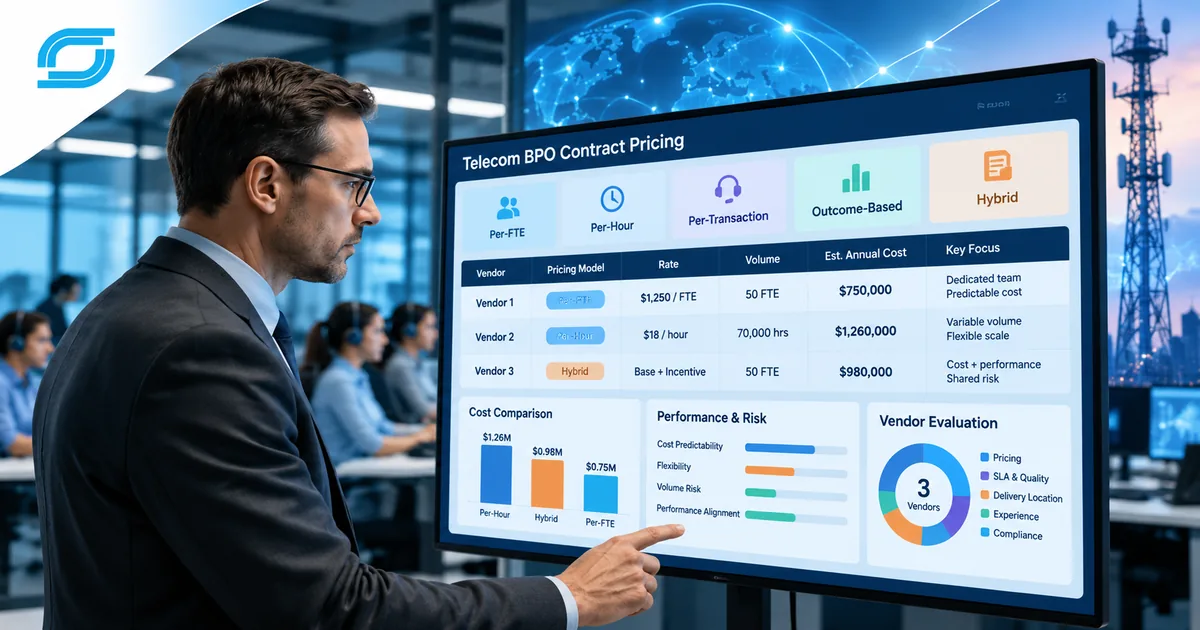
The biggest shift in retention outsourcing over the past three years is pay-for-performance. Traditional BPO contracts charge per agent hour or per handled contact, which gives the BPO no real incentive to maximize saves. Outcome-based contracts change that. The BPO earns fees tied to verified saves, churn reduction against a baseline, or ARPU retained within a defined cohort. That removes the conflict between operator and BPO goals. Our retention contracts center on save-rate guarantees, with performance bonuses when churn drops past the contracted threshold. Operators pay for results, not activity.Compliance and Consent Across Global Retention Channels
Running omnichannel retention across global markets brings regulatory complexity that in-house teams often underestimate. Any churn-reduction effort involving proactive outbound SMS, retention email, or social engagement has to comply with GDPR in Europe, TCPA in North America, PDPA in Southeast Asia, and country-specific telecom rules in every market. Sequential Tech maintains compliance frameworks for all 12 countries where it operates — consent validation at the point of contact, channel-specific opt-out management, and audit-ready interaction logs. A retention campaign that breaks consent rules can trigger fines that exceed the revenue saved, so compliant program design is inseparable from effective churn reduction.How Sequential Tech Structures Omnichannel Retention Programs
Sequential Tech’s retention programs follow a four-stage model that works the same way across mobile, broadband, and enterprise postpaid segments:- Churn signal aggregation: interaction data from every channel rolls up into one subscriber risk profile. At-risk flags fire on billing-complaint volume, service-ticket frequency, social sentiment, and inbound cancel intent.
- Channel-matched outreach: agents engage on the channel where the risk first appeared — a social complaint gets a social reply, a chat escalation gets a live agent, an inbound cancel call reaches the save desk within a defined SLA.
- Personalized offer delivery: agents follow offer decision trees built on subscriber tenure, ARPU, product bundle, and market segment. Offers are tuned to keep discount cost low while keeping save probability high.
- Post-save tracking and reporting: every save is logged with channel, offer used, agent ID, and cohort. Monthly reporting gives operators channel-level save rates, cost per save, and ARPU retained — the core metrics for verifying outcome-based contracts.