
How telecom BPO services in the USA are shifting toward blended onshore delivery models and what US operators gain when compliance, cultural fluency, and AI converge in a single partner.
For years, the offshore BPO playbook wrote itself: move the contact center to a lower-cost country, cut the headcount budget, and call it a strategy. US telecom operators ran that playbook hard, and many are now quietly reversing course. Not because offshore delivery stopped being cost-efficient, but because cost efficiency alone stopped being enough. Compliance exposure, CX inconsistency, and subscriber expectations that have risen faster than offshore training models can follow have combined to make offshore-only a liability in a market that no longer tolerates rough edges.
The shift is structural, not cyclical. Telecom BPO services in USA are being redesigned around blended delivery, with onshore agents handling compliance-sensitive and high-value interactions, supported by nearshore and offshore capacity for volume and coverage. The operators making this shift are not abandoning cost discipline. They are adding something offshore-only never delivered: precision.
The offshore-only shift is part of a bigger delivery conversation — choosing onshore, nearshore, or offshore, single-shore vs multi-shore delivery, and the operational case for telecom BPO.
Why Offshore-Only Is Breaking Down for US Telecom Operators
The problems with offshore-only BPO in telecom are not new. What is new is that they have become commercially significant enough to force re-evaluation. US operators report the same friction points across segments from mobile network operators to broadband providers to MVNOs.
The pressure points driving the shift away from offshore-only include:
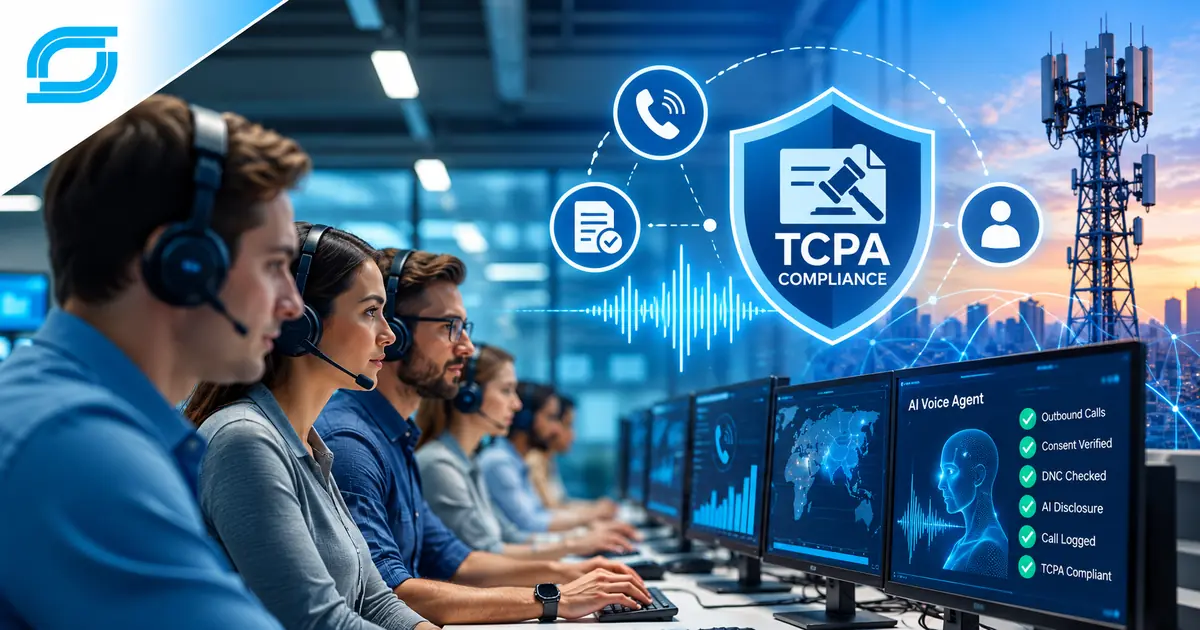
- TCPA and DNC compliance risk: offshore teams managing US outbound campaigns carry significant regulatory exposure without dedicated onshore compliance oversight
- Cultural and language gaps: US subscribers notice when agents lack familiarity with regional billing norms, plan structures, and escalation expectations
- Data security and sovereignty concerns: US enterprise telecom clients increasingly specify onshore data handling in procurement contracts
- First-contact resolution gaps: offshore teams resolving complex telecom issues, provisioning errors, disputed charges, service outages, often require escalation cycles that inflate handle times and damage CSAT
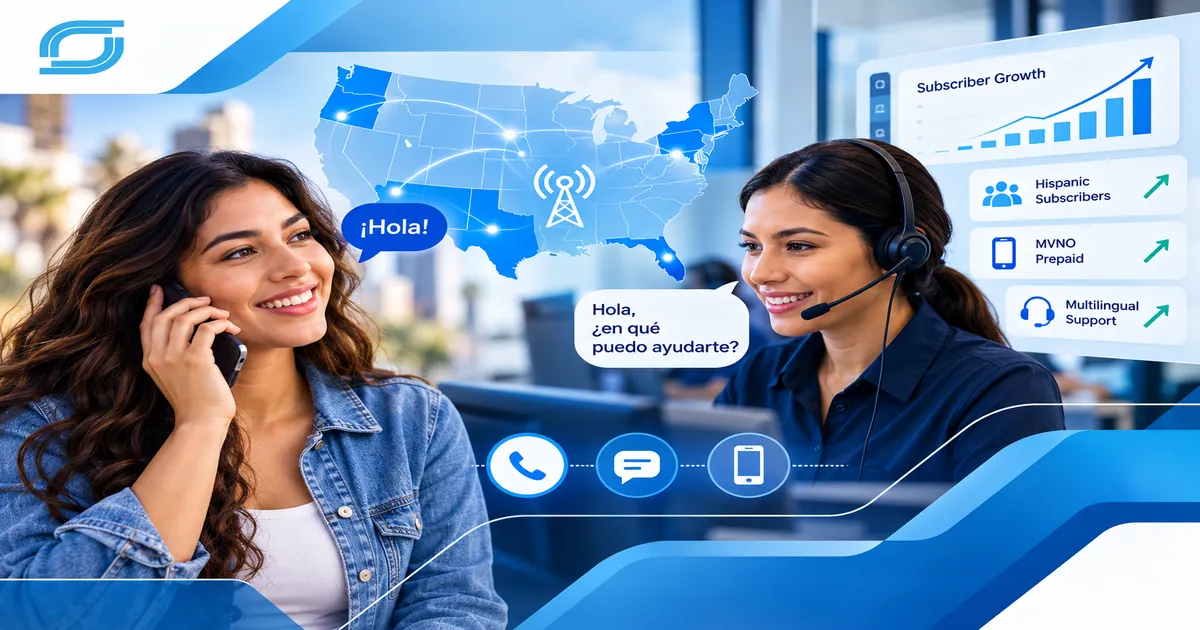
- Bilingual support gaps: US Hispanic subscriber growth in wireless and broadband has outpaced offshore teams’ Spanish-language capability calibrated for Latin American, not US, speech patterns
- AI tool latency: offshore deployment of real-time AI tools like accent harmonization and sentiment analysis adds complexity that blended onshore models eliminate
Each of these gaps creates a specific subscriber experience failure. Together, they build a pattern that US operators outsourcing telecom contact center decisions can no longer afford to ignore.
The Delivery Model Shift: US Telecom BPO in Numbers
The movement toward blended and onshore delivery is visible in global BPO procurement data. These figures reflect 2024–2026 market trends directly relevant to US telecom operators evaluating their outsourcing model.
US Telecom BPO Delivery Model Benchmarks: 2024–2026
| Metric | Data Point (2024–2026) |
|---|---|
| Onshore BPO segment revenue share globally (2025) | Largest share of global BPO market (Grand View Research, 2025) |
| North America’s share of global BPO market (2025) | 37.4% — largest regional share (Grand View Research, 2025) |
| Nearshore BPO: fastest-growing delivery segment (2025–2026) | Gaining share fastest as regulatory friction reshapes location decisions (MarkWide Research, 2026) |
| Enterprise BPO contracts specifying hybrid onshore-offshore architecture | Growing category in enterprise renewals (MarkWide Research, 2026) |
| BPO buyers seeking blend of onshore expertise and offshore cost savings | Now a primary selection trend (GigaBPO, 2026) |
| AI and automation deployed in new BPO contracts (2026) | 45–55% of new contracts include AI/ML or NLP (Deloitte / GigaBPO, 2026) |
| IT and telecom BPO: largest end-use segment globally (2025) | Largest market share by industry vertical (Grand View Research, 2025) |
| Global BPO market projected value by 2033 | $695.77 billion at 9.9% CAGR (Grand View Research, 2026) |
The onshore segment leading the global BPO market in revenue share, while nearshore gains fastest, is not a coincidence. It reflects a structural preference shift among enterprise buyers toward models that balance cost and compliance, not models that optimize for cost alone.
Three Models Replacing Offshore-Only in US Telecom BPO
US telecom operators are not dismantling offshore delivery. They are rearchitecting around it. The three models gaining traction in US telecom outsourcing today each solve a different part of the offshore-only gap.
1. Onshore-Led, Offshore-Supported
High-value and compliance-sensitive interactions, saved desk calls, billing disputes, and TCPA-governed outbound campaigns are handled by US-based agents. Routine volume: basic account enquiries, self-service escalations, after-hours coverage, and routes offshore. This model keeps compliance risk onshore while preserving the cost structure offshore delivers.
2. Blended Nearshore with Onshore Escalation
Nearshore delivery from locations like Colombia, El Salvador, Jamaica, and Belize provides timezone alignment with US operations, strong English fluency, and lower cost than fully onshore teams. Telecom BPO onshore delivery anchors the escalation layer. This model suits operators who need US timezone coverage without fully onshore cost structures.
3. AI-Augmented Onshore Teams
The fastest-growing configuration in 2026 pairs onshore agents with real-time AI tools: accent harmonization for clarity on voice channels, AI QMS for automated quality scoring, and conversational AI for first-contact deflection. US telecom contact center outsourcing partners running this model deliver onshore CX quality at a per-interaction cost that narrows the gap with offshore significantly.
The Offshore-Only Era Is Not Over But the Offshore-Only Strategy Is
Offshore delivery is not disappearing from US telecom BPO. It is being repositioned within a smarter architecture. Operators who continue running offshore-only models are carrying compliance risk, CX inconsistency, and subscriber churn that a blended model eliminates. The question for US telecom decision-makers in 2026 is not whether to use offshore capacity. It is whether their current BPO partner has the onshore infrastructure, the compliance expertise, and the AI stack to build a model that actually works.
READY TO BUILD A SMARTER US TELECOM BPO MODEL?
Sequential Tech operates six US delivery centers across Georgia, Florida, Texas, and beyond, backed by 20+ years of telecom-exclusive BPO experience, a full AI stack, and bilingual English/Spanish agent capability built for the US subscriber base.